
materials science · nuland project · 2024
Growing New Land:
Electrolytic Mineral
Accretion at Scale
We developed a controlled electrochemical process that grows calcium composite structures — a limestone analogue — at 219 times the speed of conventional biorock technology. Here is what we built, how it works, and why we think it can change how we can approach land, infrastructure, and the ocean.
December 2024 · public research update
§ 1 — the problem
The ocean can build stone.
It just does it too slowly.
In 1976, architect Wolf Hilbertz discovered that dissolving minerals in seawater could be electrochemically deposited onto metal frames, growing limestone-like structures directly in the ocean. He called it biorock. It worked. But it grew at just 20 mm per year.
At that rate, building a one-meter-thick wall would take 50 years. Essentially, the physics were sound but the kinetics weren't. For decades, biorock remained a beautiful scientific curiosity with no path to industrial relevance. We set out to change that.
Why conventional biorock is slow: four fundamental constraints
Limited ionic concentration
Seawater contains dissolved calcium at only 400–420 mg/L. The mass transfer rate to the cathode is constrained by how much material is available in solution.
Uncontrolled solution chemistry
Seawater is a cocktail of competing ions. Multiple mineral phases deposit simultaneously, reducing control over composition and final material properties.
Environmental variability
Temperature, salinity, and current fluctuations in real marine environments introduce significant inconsistencies in accretion rates and material quality.
Diffusion-limited kinetics
The rate-limiting step is diffusion of ionic species to the cathode surface — inherently slow at ambient ocean concentrations and without forced convection.
§ 2 — the process
A controlled environment
for a controlled material.
The core insight: every limitation of seawater-based biorock is a parameter we can engineer around. Instead of accepting the ocean as our electrolyte, we designed our own.
Electrolyte engineering
- →Enhanced ionic concentration: Significantly higher calcium and aluminum precursor concentrations than seawater, overcoming diffusion-limited kinetics directly.
- →pH buffering (8–10): Continuous maintenance of optimal pH promotes carbonate precipitation while suppressing unwanted side reactions.
- →Trace element addition: Controlled introduction of iron, copper, and magnesium species to tune material properties and crystal structure.
- →Temperature control (20–30°C): Narrow thermal window ensures reproducible crystal morphology across production batches.
Electrical stimulation protocol
- →Electrode configuration: Steel reinforcement structures as cathodes; dimensionally stable anodes positioned for optimal current distribution.
- →Current density: 50–200 mA/cm²: 10–40× higher than typical biorock systems (1–5 mA/cm²), directly accelerating electrochemical reaction rates.
- →Pulsed waveform modulation: Non-DC waveforms enhance nucleation rates and improve crystal quality beyond what constant-current electrolysis achieves.
- →Wireframe geometry control: Low-carbon steel wireframes direct material growth into precise three-dimensional geometries — including complex curves and multi-layer structures.
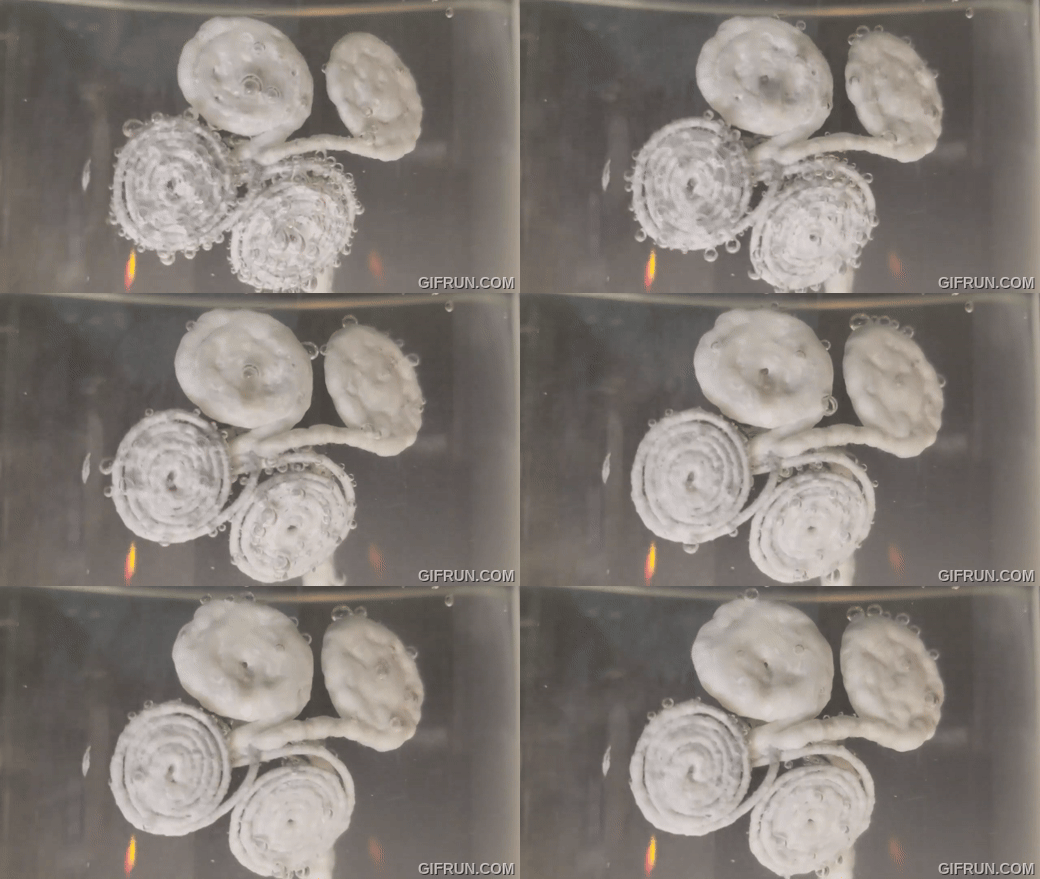
Carbonate formations nucleating on cathode surface under controlled electrolysis
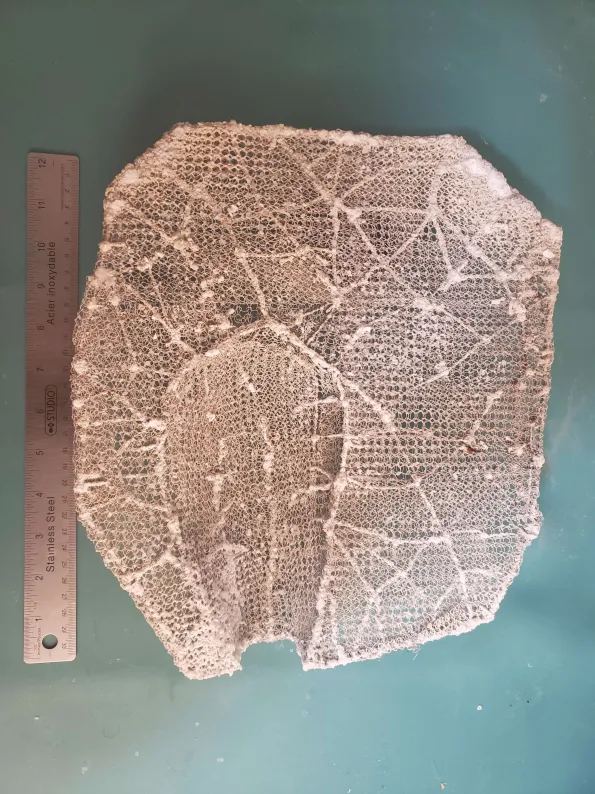
Low-carbon steel wireframe — growth substrate and geometric template
§ 3 — the chemistry
Water becomes stone
at the cathode.
When electrical current passes through the electrolyte, the cathode drives a local increase in pH through the reduction of water. This alkaline environment triggers the spontaneous precipitation of calcium carbonate, the same mineral that forms limestone, shells, and coral skeletons.
cathode reactions (reduction)
2H₂O + 2e⁻ → H₂ + 2OH⁻Water splits — hydroxide ions raise local pH
Ca²⁺ + CO₃²⁻ → CaCO₃ ↓Calcium carbonate precipitates (limestone analogue)
Mg²⁺ + 2OH⁻ → Mg(OH)₂ ↓Brucite deposits — adds structural character
Al³⁺ + 3OH⁻ → Al(OH)₃ ↓Aluminum hydroxide — our key addition; enhances rigidity
anode reactions (oxidation)
2H₂O → O₂ + 4H⁺ + 4e⁻Oxygen gas evolves; protons released
2Cl⁻ → Cl₂ + 2e⁻Chlorine gas evolves in chloride-rich electrolytes
why our composite differs from biorock
Conventional biorock produces aragonite (CaCO₃) and brucite (Mg(OH)₂). Our process incorporates aluminum hydroxide and aluminum oxide hydrates through the controlled addition of aluminum precursors. This addition is responsible for enhanced structural rigidity, reduced porosity, and the antimicrobial properties we observe.
§ 4 — the breakthrough
219 times faster.
This is what that looks like.
Systematic measurements across multiple sample runs demonstrated a consistent growth rate of 12 mm/day under optimized conditions, equivalent to 4,380 mm/year (4.4 m/year). This is a 219-fold improvement over the reported biorock growth rate of 20 mm/year.
nuland process
conventional biorock
Growth rate comparison (mm / year)
Chart uses a square-root scale to make both bars visible. The true ratio is 219:1.
Enhanced mass transport
Higher ionic concentrations reduce diffusion path lengths. More material reaches the cathode per unit time.
Increased reaction kinetics
Higher current densities and optimized waveforms accelerate the electrochemical reactions directly, not just the supply.
Controlled environment
Elimination of temperature, salinity, and current variability enables consistent, maximal-rate deposition with no interruptions.
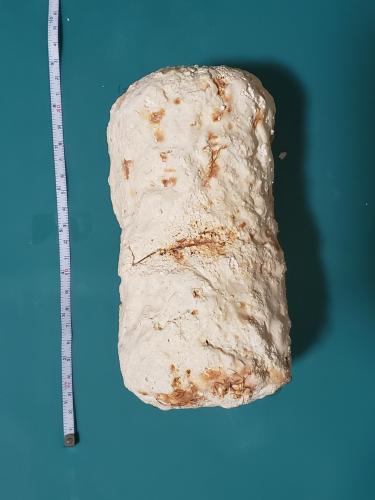
Representative sample from a single growth run, measured with calibrated tape (±1 mm)
§ 5 — material properties
Lightweight concrete strength.
Grown, not poured.
Characterization using XRD, EDS, and FTIR spectroscopy, combined with mechanical testing per ASTM standards, reveals a material that sits comfortably in the lightweight structural concrete category, while offering properties no conventional concrete can match.
Composition
Primary phase
CaCO₃ / Ca(OH)₂Calcium carbonate + hydroxide
Aragonite-analogue crystal structure — the backbone of limestone and coral
Secondary phase
Al(OH)₃ / AlO(OH)Aluminum hydroxides & oxide hydrates
Our key addition — responsible for enhanced rigidity and antimicrobial properties
Trace elements
Fe₂O₃ · Cu · Mg(OH)₂Iron oxides, copper, brucite
Controlled trace additions tuning crystal morphology and final material character
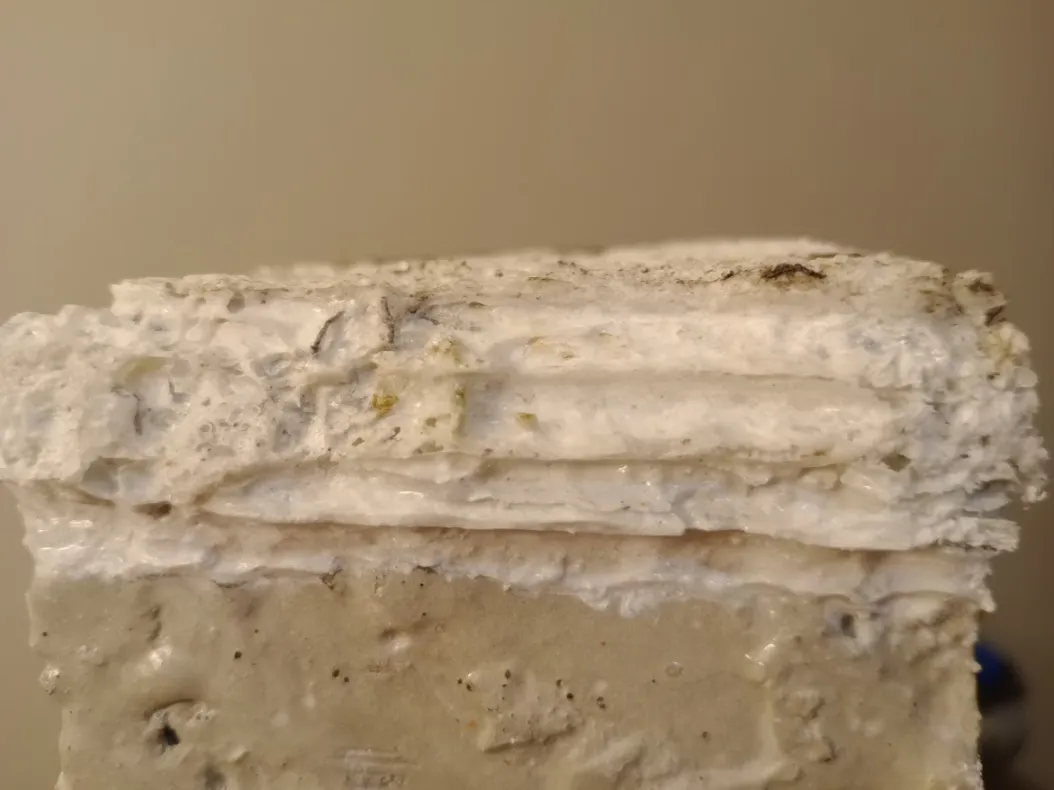
Cross-section showing distinct mineral strata
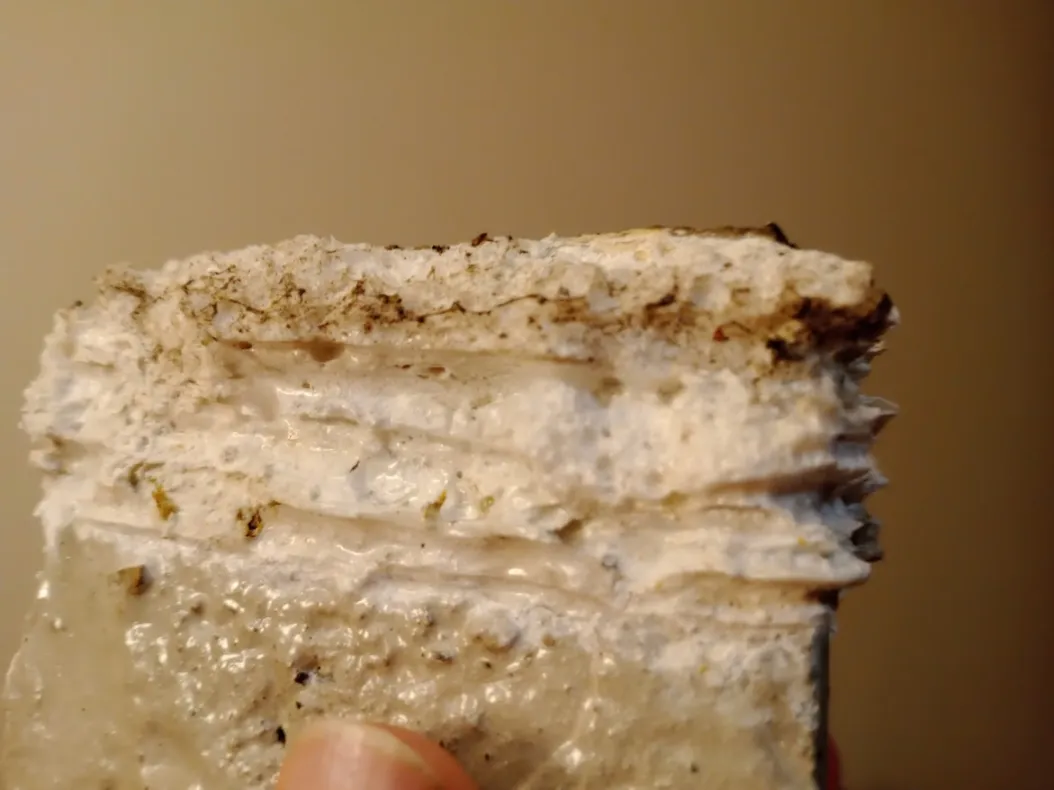
Layered mineral deposition detail — aragonite analogue structure visible
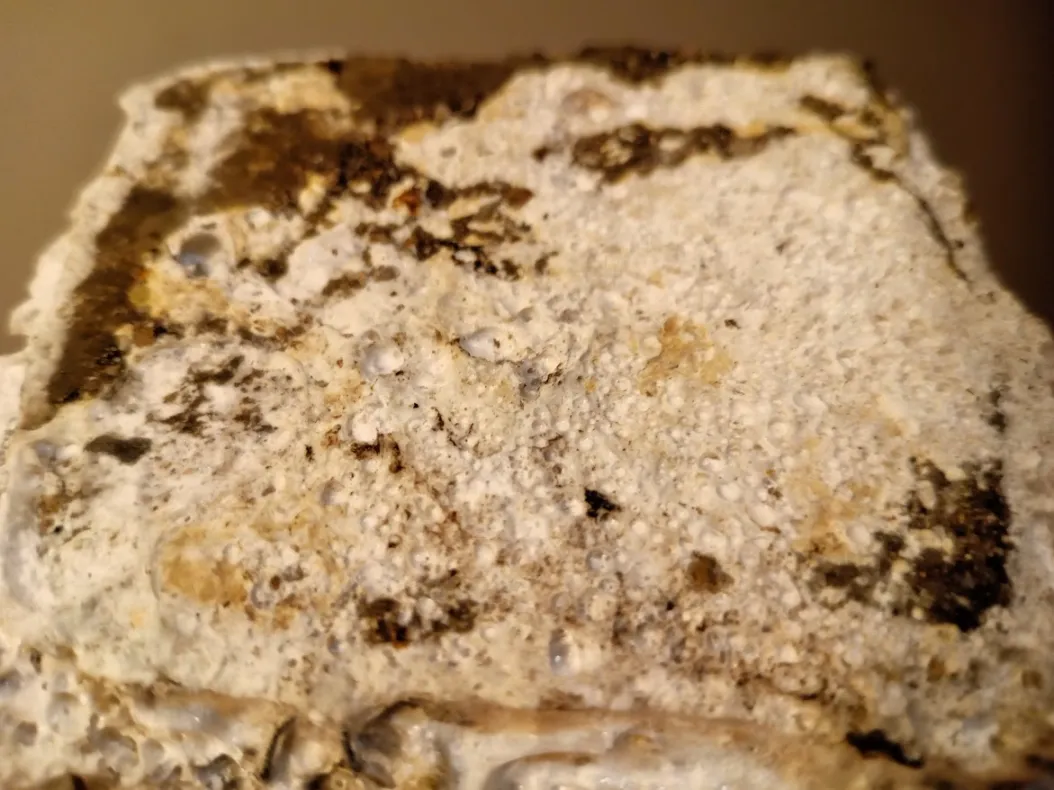
Surface texture of the composite — granular calcium-aluminum matrix
Compressive strength comparison (MPa) — mid-range values
Our composite sits firmly in the structural range. Hover for material context.
| property | nuland composite | std. concrete | limestone | biorock |
|---|---|---|---|---|
| Compressive Strength | 25–37 MPa | 20–40 MPa | up to 180 MPa | 25.6–36.9 MPa |
| Bulk Density | 1.5–2.2 g/cm³ | 2.3–2.5 g/cm³ | 1.5–2.7 g/cm³ | ~2.0 g/cm³ |
| Porosity | 15–35% | ~5–15% | 0.1–40% | ~20–30% |
| Mohs Hardness | 2.5–3.5 | ~3.0 | 3.0 (calcite) | ~3.0 |
| Marine durability | Stable — self-healing | Degrades (chloride) | Moderate | Stable |
| Growth rate | 4,380 mm/year | N/A (cast) | N/A (quarried) | 20 mm/year |
Mechanical testing per ASTM D2938-86. Density via Archimedes' principle. Porosity via mercury intrusion porosimetry.
§ 6 — durability & self-healing
It repairs itself.
Concrete can't do this.
Extended immersion testing across more than six months revealed properties that distinguish this material from every conventional construction option, and point toward an entirely new category of living infrastructure.
Marine stability
No degradation detected in extended immersion testing across both freshwater and simulated seawater environments. No corrosion, no delamination, no structural loss.
Standard concrete suffers chloride-induced corrosion of steel reinforcement in marine environments.
Self-healing
Samples subjected to controlled cracking and re-immersed in electrolyte with low-level stimulation (1–5 mA/cm²) demonstrated partial crack closure within 2–4 weeks.
Damaged structures can be re-energized in-situ — the same process that built them repairs them.
Biofouling resistance
Despite the material's porous nature, no microbial colonization or biological degradation was detected after extended storage in humid, non-sterile conditions.
Attributed to the aluminum hydroxide component, which is known to exhibit antimicrobial properties — a passive, permanent effect.
energy efficiency
Competitive with Portland cement. Far below aluminum.
The higher current densities required for accelerated growth result in increased energy consumption relative to conventional biorock. However, our estimated 1–3 kWh/kg compares favorably to other materials at scale.
Energy per kg of synthesized material. Nuland: 1–3 kWh/kg. Portland cement: 0.9–1.0 kWh/kg. Aluminum: 14–16 kWh/kg.
§ 7 — applications
A material that belongs
in the ocean.
The combination of rapid growth, marine compatibility, self-healing behavior, and structural adequacy opens application categories that have no conventional alternative.
Marine construction
- —Artificial reef structures with accelerated fabrication timelines
- —Breakwaters and coastal protection systems
- —Floating platform infrastructure
- —In-situ repair of underwater structures
- —Underwater foundations and pilings
Sustainable infrastructure
- —Structural components with reduced carbon footprint vs Portland cement
- —Modular construction elements for remote or island locations
- —Coastal erosion mitigation using grown seawalls
- —Electrolysis-powered building on renewable energy grids
- —Closed-loop material production with recycled electrolyte
Innovative architecture
- —Complex geometrical structures difficult to achieve with conventional formwork
- —Large-scale sculptural and architectural installations
- —Habitat structures for aquaculture and mariculture
- —Territorial expansion — grown extensions to existing landmasses
- —Emergency coastal infrastructure at disaster sites
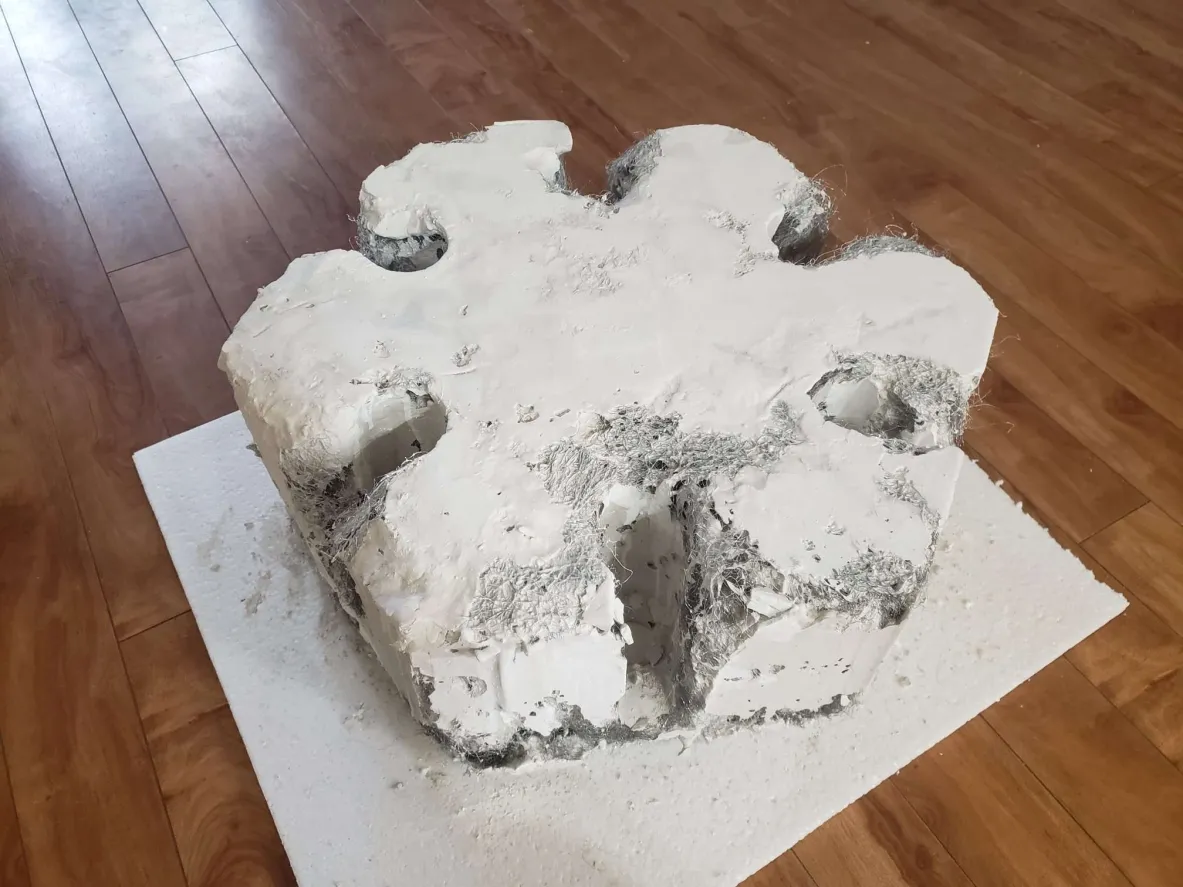
Lab-scale prototype — side view
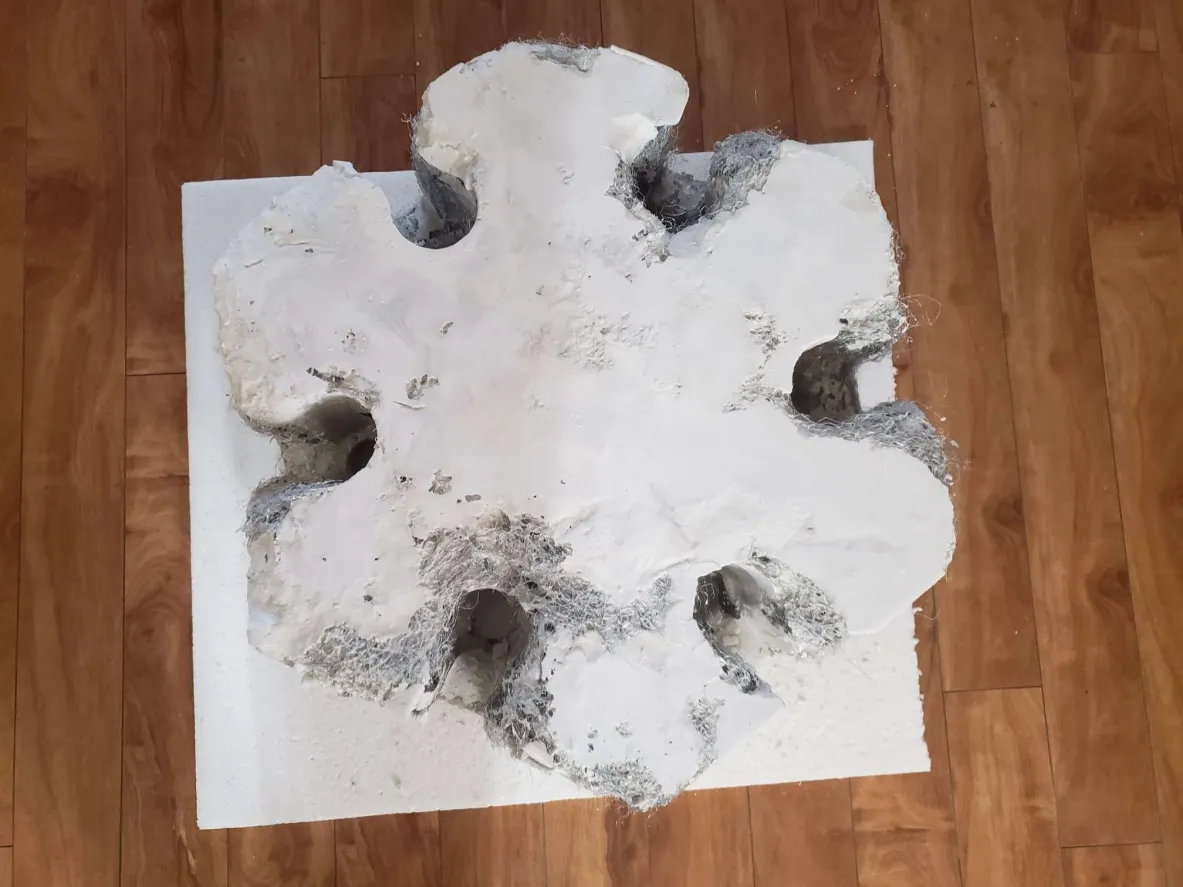
Same prototype — top-down view showing growth cavity geometry
§ 8 — the platform vision
Nuland: a floating
reef that is also a settlement — for research & mainland population alleviation.
The most ambitious application of accelerated mineral accretion is the fabrication of large-scale floating platforms. These structures can serve simultaneously as human habitat and marine ecosystem. Submerged surfaces become artificial reefs, and above the waterline: soil, vegetation and buildings.
The name “Nuland” is intentional. We're not taking land from the sea, we're growing it.
hypothetical platform analysis — 50m × 30m × 10m
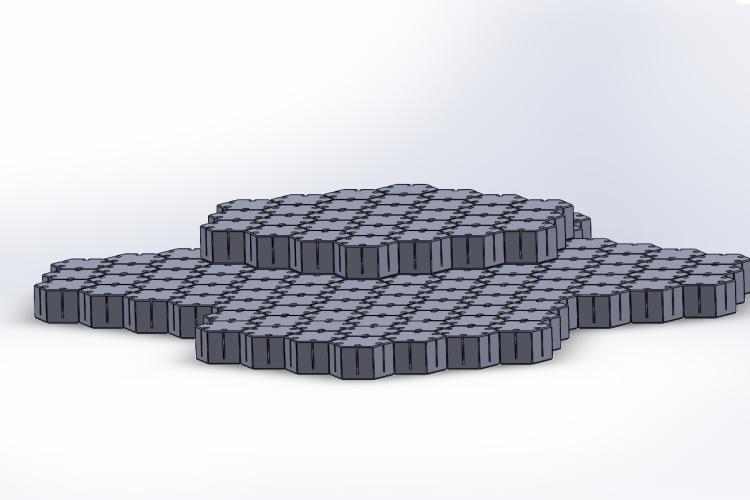
Double-stacked hexagonal module concept — SolidWorks render
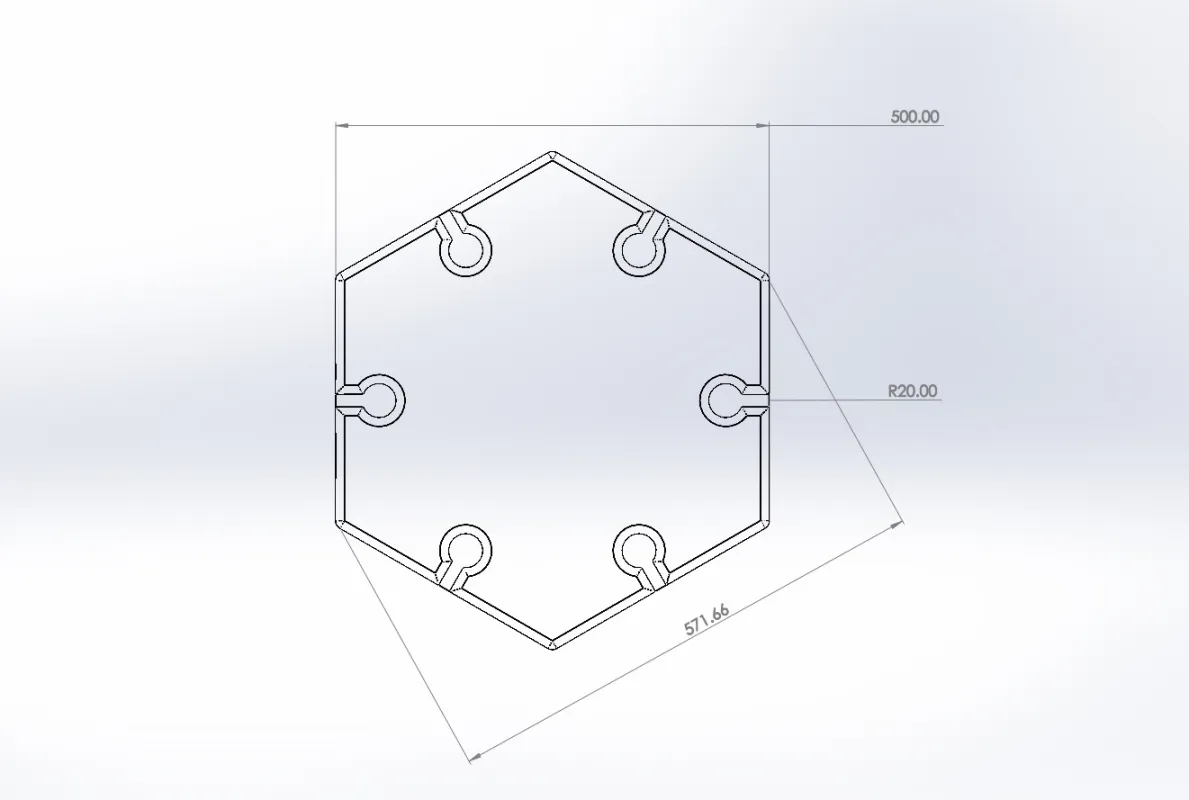
Hexagonal module engineering drawing — 500mm flat-to-flat, R20 interlocking joints
Why conventional materials fail at sea
- ✕Steel corrodes — chloride ions attack reinforcement inside concrete
- ✕Concrete spalls and cracks from freeze-thaw and wave impact cycles
- ✕Conventional materials are inert — they don't integrate with ecosystems
- ✕No self-repair: damage accumulates until structural failure
- ✕High embodied carbon from cement production
Why accreted composite is different
- ✓Chloride-stable — no internal steel to corrode
- ✓Self-heals when reactivated with low-level electrical current
- ✓Porous surface invites marine organism colonization — reef by design
- ✓Grown into complex shapes — no formwork, no waste
- ✓Fabricated with electricity, not CO₂-intensive kilning
“The theoretical vision isn't just a floating platform. It's the first increment of a permanently expanding experimental reef-settlement; a new kind of territory that grows while it lives.”— Nuland Project research brief, 2024
§ 9 — open questions
What we haven't solved yet.
We're committed to transparency about what remains unknown. Laboratory demonstrations have been limited to structures under 1 m³. The leap to industrial scale is not yet solved.
Long-term mechanical stability
Short-term testing is promising, but multi-year studies are needed to assess creep, fatigue, and environmental degradation under realistic loading conditions. We have not yet observed long-term failure modes.
Process scalability beyond 1 m³
All laboratory demonstrations have been limited to sub-cubic-meter structures. Engineering solutions for large tank systems, electrical infrastructure distribution, and materials handling at industrial scales have not yet been demonstrated.
Compositional optimization
The full relationship between electrolyte formulation, electrical parameters, and resulting material properties is not yet characterized. Systematic parametric studies would enable tailored material design for specific structural applications.
Environmental lifecycle analysis
While the process appears environmentally benign at laboratory scale, comprehensive lifecycle analysis and ecological impact studies are needed — particularly for large-scale marine deployments and electrolyte discharge effects.
Standardization and regulatory pathways
No standardized testing protocols exist for accreted composites as structural materials. Development of testing standards specific to this material class is required before regulatory approval for load-bearing applications can be obtained.
§ 10 — conclusion
A paradigm shift.
From curiosity to viable process.
This work demonstrates the first successful acceleration of electrolytic mineral accretion to industrially relevant growth rates that we know of. The resulting calcium-aluminum composite exhibits mechanical properties comparable to lightweight concrete while offering properties no conventional material can match in marine environments.
The 219-fold improvement in growth rate over conventional biorock transforms mineral accretion from a scientific curiosity to a potentially viable industrial process. The Nuland Project is our commitment to pushing this from the lab bench to the open ocean.
What we have demonstrated
- —12 mm/day growth rate — 219× faster than biorock
- —Compressive strength comparable to lightweight structural concrete
- —Self-healing under low-level electrical reactivation
- —No biofouling or marine degradation after 6+ months
- —Precise geometric control via wireframe-directed growth
What this enables
- —Floating platform infrastructure grown from seawater minerals
- —Self-repairing marine construction — maintenance by re-energizing
- —Artificial reefs fabricated on demand, not dredged
- —Carbon-competitive structural material without Portland cement
- —New land — genuinely new territory — grown not built
What comes next
- —Pilot-scale demonstration (>10 m³ structures)
- —Long-term mechanical stability studies (3+ years)
- —Electrolyte lifecycle and environmental impact assessment
- —Engineering design for large-format floating platforms
- —Regulatory and standards development pathway
get involved
This research is open.
We welcome your participation.
The Nuland Project is an open research initiative. We're actively looking for collaborators across material science, marine engineering, structural engineering, ecology, and policy. Whether you are a researcher, an engineer, a marine architect, or simply curious, we want to hear from you.
We believe the most interesting problems about how humanity relates to the ocean will not be solved by any single organization. If this work raises questions you want to explore — or things that you think we have wrong — let's talk.
Researchers & scientists
- —Material characterization and parametric studies
- —Environmental lifecycle and ecological impact analysis
- —Long-term mechanical stability and fatigue testing
- —Compositional optimization for specific applications
Engineers & builders
- —Scale-up engineering for large tank systems
- —Structural design for floating platform applications
- —Electrical infrastructure design at production scale
- —Pilot project planning and site selection
Marine architects & ecologists
- —Reef integration design for submerged structures
- —Terrestrial ecosystem planning for floating platforms
- —Biofouling dynamics and marine colonization studies
- —Coastal protection application design
Policy, investment & community
- —Regulatory pathway development for novel materials
- —Funding and investment discussions
- —Island and coastal community engagement
- —Governance frameworks for new maritime territory
Start the conversation.
Questions, ideas, critiques, collaboration proposals are all welcome.
stay updated
support us
we are a registered Canadian non-profit.
donation information is soon to come.